
| Share On: | |
|---|---|
| Categories: | NAPOPC.M2M DA Server |
| Review: | Write your review |
| Resources: |
<!-- .redtext { color: #FF0000; font-weight: bold; } .bluetext {color: #0000FF; font-weight: bold; } .style5 {color: #B8C9DD} -->
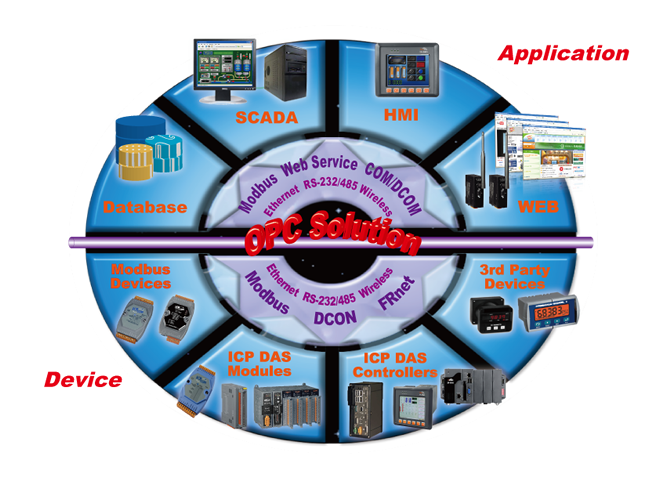
NAPOPC-MB-S free OPC DA Server (The "OPC" stands for "OLE for Process Control" and the "DA" stands for " Data Access") provided by ICP DAS. The first standard (originally called simply the OPC Specification and now called the Data Access Specification) resulted from the collaboration of a number of leading worldwide automation suppliers working in cooperation with Microsoft. Originally based on Microsoft's OLE COM (component object model) and DCOM (distributed component object model) technologies, the specification defines a standard set of objects, interfaces and methods for use in process control and manufacturing automation applications to facilitate interoperability.
 | NAPOPC-MB-S is an out-of-process OPC Server which provides an Explorer-style user interface. The left side region of IDE is the tree type structure showing equipment's in the Device/Group/Tag tree structure; the right side region is the attribute description for each Group and Tag, all the attributes even those hidden in the setting up dialog box can be displayed in the table, clearly and conveniently. The up side region is a tool icon bar for the functions often used, user can see the graph to know the function of that icon and directly select the needed function. |
 | NAPOPC-MB-S, besides single-thread communication in the equipment communication mechanism, provides multi-thread communication to communicate with each COM Port and each socket in independent thread service. It increases the speed of equipment's data integration, and also provides users a flexible planning possibility that users can set the idle time for individual equipment so that equipment polling frequency on the same communication backbone can be regulated according to the actual requirements.
|
 | When users setup the DCON I/O modules (I-7K; I-87K; I-8K; RU/USB-87Pn) that supported by ICP DAS, NAPOPC-MB-S provides the “Auto Search” function for users’ convenience. If the equipment's are on-line, the users can just enable the “Auto Search” function, and then the NAPOPC_ST DA Server will automatically scan and identify the linked DCON I/O modules and list modules in Device/Group/Tag structure. The NAPOPC_ST DA Server provides a “Monitor” function for users real-time monitoring/controlling the equipments. |
 | If the equipment's are off-line, users can directly select the names of I/O modules from the “Device” dialog, and then click on “Generate Tags” function, the NAPOPC_ST DA Server will automatically setup the DCON I/O modules’ attributes in the Device/Group/Tag structure. It is easy to generate a whole set configuration, and doesn’t need to bother about checking each attribute of the DCON I/O modules or setting the corresponding structure. |
 | NAPOPC-MB-S, besides the DCON I/O modules of ICP DAS, supports Modbus based communication I/O modules (M-7K; ET-6000/7000) and programmable automation controllers (PAC: XP-8000 ; XP-8000-CE6 ; WinCon; WinPAC; μPAC; iPAC) by ICP DAS. Through NAPOPC-MB-S, the integration with I/O modules and controllers of ICP DAS becomes pretty convenient. |

In addition to above functions that support the DCON and Modbus I/O modules of ICP DAS, NAPOPC-MB-S also provides two unique designs that users can apply NAPOPC-MB-S with more flexibility.
Traditionally, OPC Server acquires equipment data by the way of polling. In NAPOPC-MB-S, if processing with the NAPOPC_CE5 DA Server or the UPC equipment, the NAPOPC-MB-S is able to actively receive the data from the NAPOPC_CE5 DA Server or UPC equipment. Data transmitted by such an active way can significantly shorten the information update time!
According to the scenarios of the OPC Client for different equipment needs, the users may save the different scenario configurations to the separate documents. When the OPC Client launches the NAPOPC-MB-S in runtime, OPC Client can select which document to be loaded, not only by NAPOPC-MB-S like other OPC Server. This function gives users more flexibility when setting configuration in the OPC Client.


This application architecture is a NAPOPC-MB-S Server centric Client-Server monitor/control system. By the
NAPOPC-MB-S, the data of equipments are collected together and provides for use of several clients.
It reduces the loading that equipment's service for the different clients, and also improves the stability and reliability
of the system. There are three perspectives to be considered in such systems:

Similarly, this application architecture is a NAPOPC-MB-S Server centric Client-Server monitor/control system. The NAPOPC-MB-S collects the equipment data together and provides the data for use of several clients. It reduces the loading that equipments servicing for different clients, and also improves the stability and reliability of the system.
In many cases that are different from above typical protocol conversion application, the NAPOPC-MB-S often needs to apply communication through several COM Ports with hundreds of ICP DAS DCON I/O modules and those modules, however, are dispersed in many places. If the system directly wires by RS-485, the signal will be attenuated and the cost will be very high. Therefore, in some applications such as community building monitoring, users can take advantage of the existing Ethernet network as the communication backbone and apply some converters to have a number of virtual COM Ports for use of NAPOPC-MB-S.
This kind of application combines the DS/PDS-700 Device Server and the VxComm technology to allow maximum 255 virtual COM ports for the communications when the NAPOPC-MB-S applies the DCON & Modbus communication. Wherein the communication between the NAPOPC-MB-S and the DS/PDS-700 is through the Ethernet network; the communication within DS/PDS-700, I/O modules and controllers is through the
RS-232/RS-485 network.

Similarly, this application architecture is a NAPOPC-MB-S Server centric Client-Server monitor/control system. The NAPOPC-MB-S collects the equipment data together and provides the data for use of several clients. It reduces the loading that the equipments servicing for different client programs, and also improves the stability and reliability of the system.
In this application, being different from above typical protocol conversion application, the NAPOPC-MB-S collects the equipment's data by the way of wireless communication and provides them for use of client end. It is time to apply this wireless I/O application, when I/O equipments are located in an area that no Ethernets connection but still near the ISP stations so that it can communicate through the wireless network, such as the environmental monitoring system in the remote mountain.
In this architecture, the users can apply the GSM/GPRS (GTM-201 series) modem and WinPAC controllers provided by ICP DAS. In the NAPOPC-MB-S end, the users can use the Ethernet directly, if available. If there is no Ethernet, users can get a public IP via the GPRS of the GTM-201 series. In the WinPAC end, the WinPAC controller not only collects various I/O data, gets the public IP via the GPRS of GTM-201 series, but also transmits the data by batches via Modbus TCP protocol. However, this architecture cannot guarantee the real-time transmission due to the transmission limitation of ISP.
Our mission is to provide the absolute best customer experience in industrial automation and electronics, without exception.


Subscribe to our mailing list today and join thousands of others who want to stay up-to-date with the latest news in data acquisition and industrial data communication.
ICP DAS USA is a leading manufacturer of industrial data acquisition, data communication, programmable controllers, wireless and software solutions.
 User's Manual
  FREE NAPOPC_ST DA Server for PC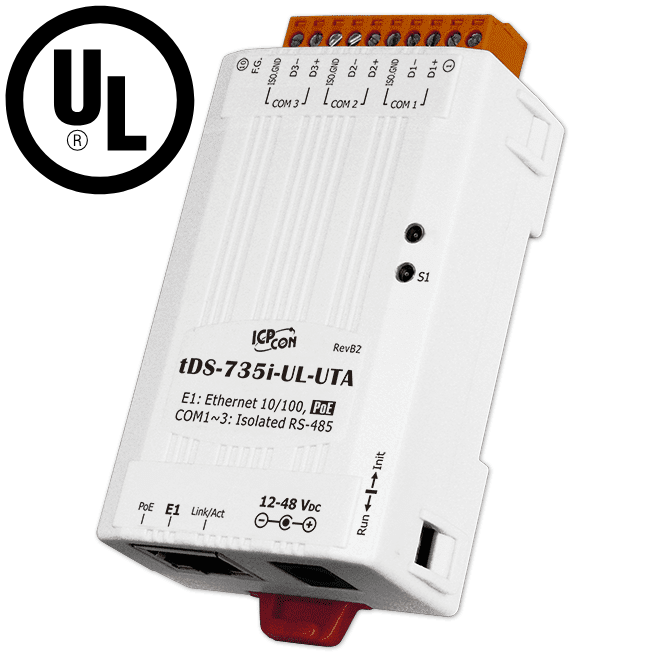
Add a review
Your email address will not be published. Required fields are marked *