
| Share On: | |
|---|---|
| Categories: | Modbus Converters and Gateways | CANBus Converters and Gateways |
| Review: | Write your review |
| Resources: |

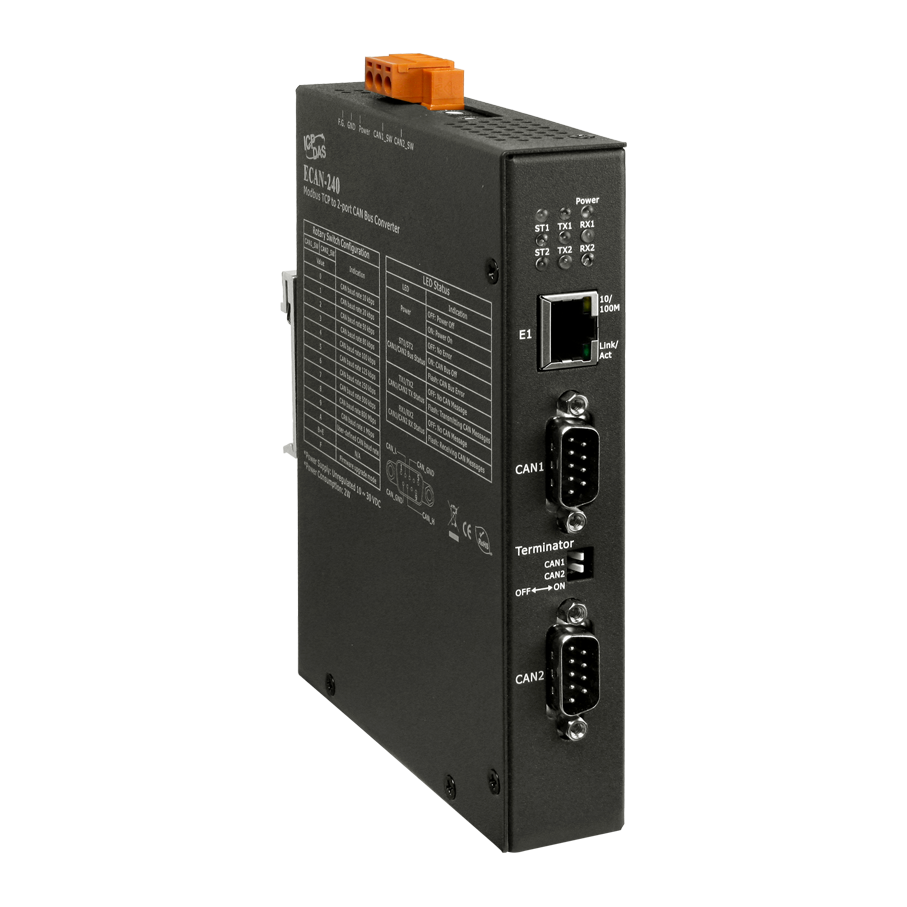
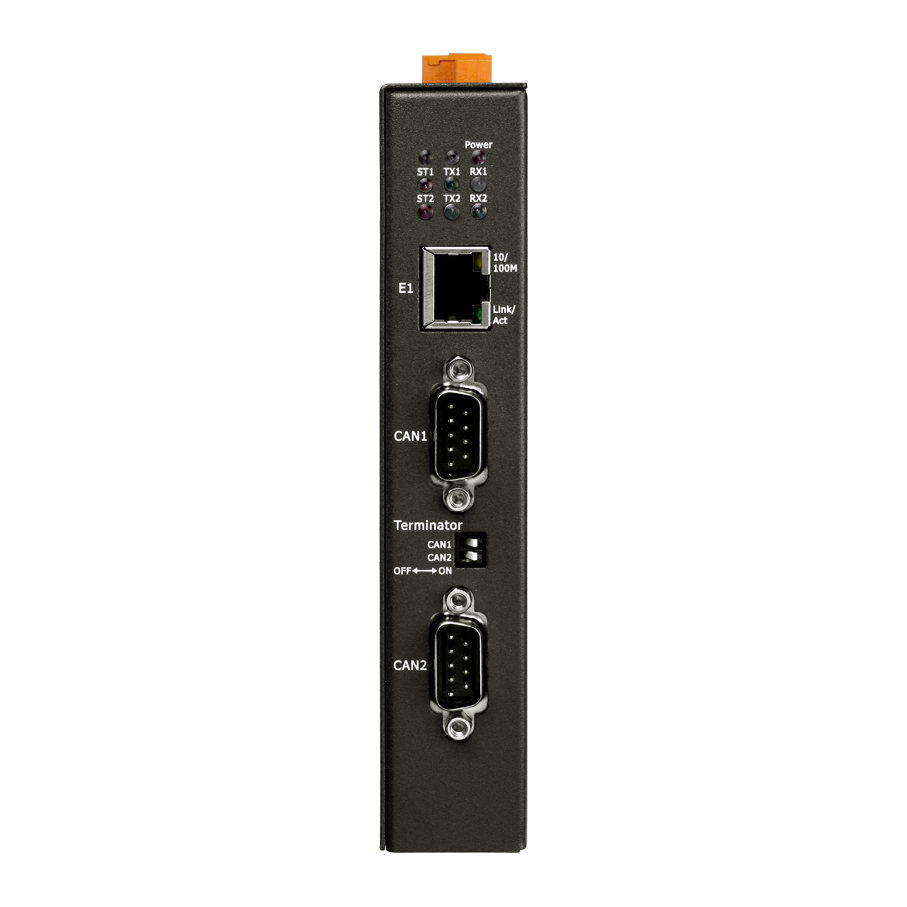
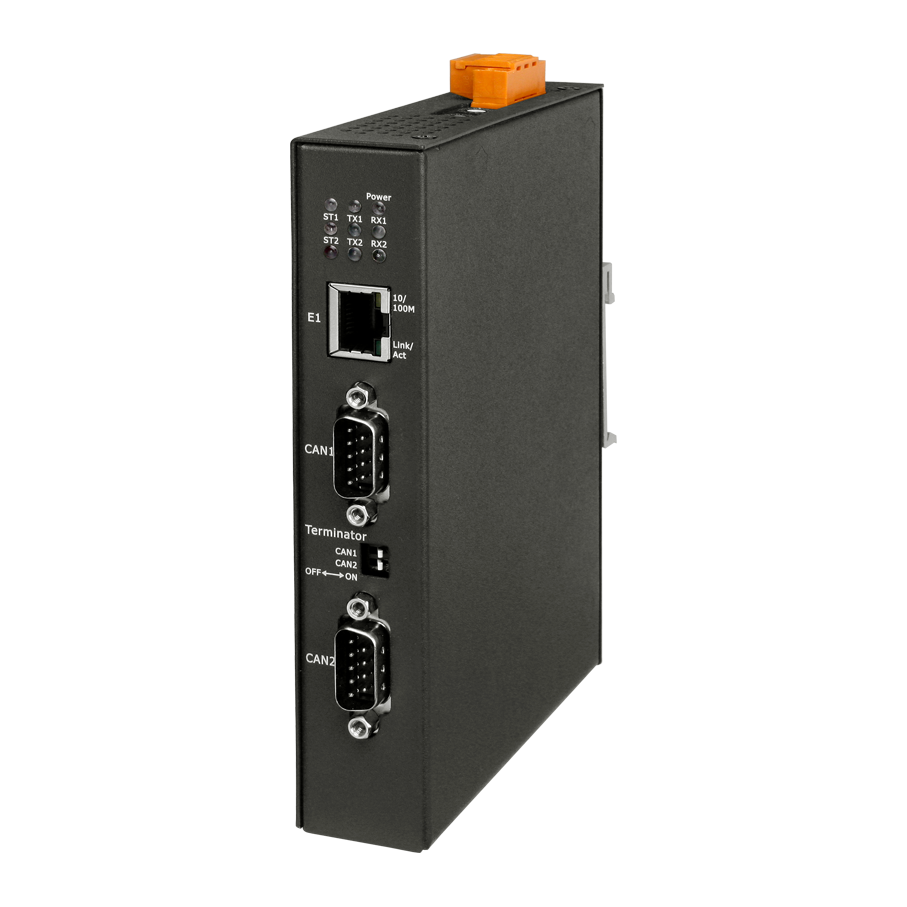
The ECAN-240 is a Modbus TCP, 2-port CAN Bus Gateway Module. The module communicates via the Ethernet based on the Modbus TCP industrial protocol, allowing easy integration with an industrial network. ECAN-240 includes 2-port CAN bus interfaces, allowing multiple CAN applications to be supported, such as a CAN bridge or a CAN message router. With the CAN message router functionality, the module allows four different CAN networking to be connected ensuring communication with each other.
The Modbus TCP Server function is used to implement communications between a CAN device and a Modbus TCP Client. When the ECAN-240 module is acting as a Modbus TCP Server, the Modbus TCP Client needs to use Modbus commands based on the CAN format in order to access the ECAN-240 module. The ECAN-240 module will then translate these commands into CAN format messages and send them to the CAN networks. Similarly, when a CAN format message is received from the CAN network, the ECAN-240 translates the message into Modbus format, which can then be accessed using a Modbus command.

The Modbus TCP Client function is used to implement communications between a CAN Bus and a Modbus TCP Server. When the ECAN-240 module is acting as a Modbus TCP Client, it can access the Modbus TCP Server via the command configuration. When the ECAN-240 module receives I/O data, it will forward it to the remote CAN devices for analysis, control, or other operations. Once configured, the ECAN-240 module is also able to access the Modbus TCP Server via a CAN message.

The Pair Connection function is used to implement communication between two ends of CAN network. CAN Network #1 can communicate with CAN Network #3 or CAN Network #4 using pair connection configuration. Similarly, CAN Network #2 can also communicate with CAN Network #3 or CAN Network #4 in the same manner. The pair connection function on the ECAN-240 module is implemented via either the TCP or the UDP protocol.

The Transparent option is to see as a half-pair connections. The TCP/UDP packet is in CAN format and contains the CAN ID. This is useful because it allows custom TCP/UDP programs to be developed that can directly access the ECAN-240 module for specific applications.

| LED Indicators | |
|---|---|
| Status | 1 x Power 6 x CAN status |
| Ethernet | |
|---|---|
| Ports | 1 x RJ-45, 10/100Base-T(X) |
| Protocol | Modbus TCP Server, TCP, UDP, HTTP |
| Socket Connections | 8 for TCP, 1 for UDP |
| CAN | |
|---|---|
| Ports | 2 |
| Baud Rate | 10 k ~ 1M bps |
| Isolation | 3000 VDC for DC-to-DC, 2500 Vrms for photo-couple |
| Terminal Resistor | Built-in 120 ohm terminal resistor, enabled/disabled via DIP-Switch |
| Specification | ISO 11898-2 CAN 2.0A and CAN 2.0B |
| Filter | Yes |
| Power | |
|---|---|
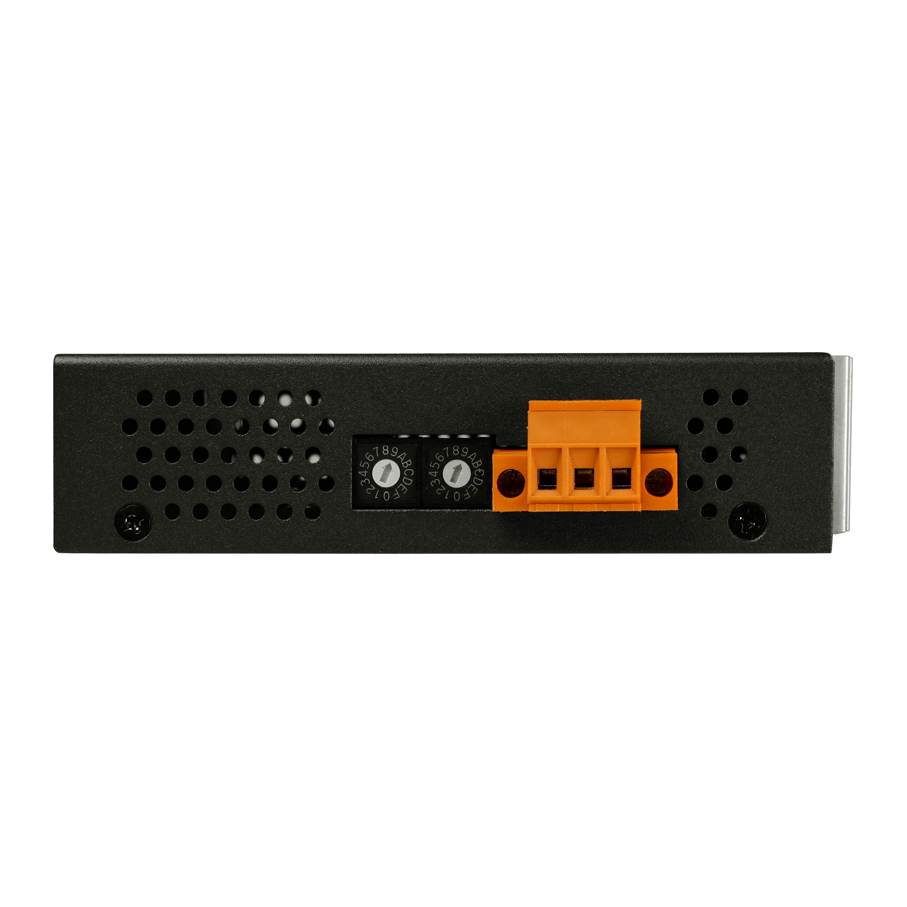
| Input Range | +10 VDC ~ +30 VDC |
| Consumption | 2 W |
| Mechanical | |
|---|---|
| Casing | Metal |
| Dimensions (mm) | 106.8 x 146.8 x 25.9 (W x L x H) |
| Installation | DIN-Rail |
| Environment | |
|---|---|
| Operating Temperature | -25 ~ +75 °C |
| Storage Temperature | -30 ~ +80 °C |
| Humidity | 10 ~ 90% RH, Non-condensing |
Our mission is to provide the absolute best customer experience in industrial automation and electronics, without exception.


Subscribe to our mailing list today and join thousands of others who want to stay up-to-date with the latest news in data acquisition and industrial data communication.
ICP DAS USA is a leading manufacturer of industrial data acquisition, data communication, programmable controllers, wireless and software solutions.
 Data Sheet
 Firware
 PIN Assignment
 2D DWG Drawing
Add a review
Your email address will not be published. Required fields are marked *