
What Is a BMS? A Simple Guide to Building Management Systems
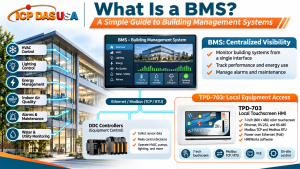
A Building Management System (BMS) is a centralized platform that helps facility teams monitor, control, and optimize building operations from a single interface. Instead of managing HVAC, lighting, energy, and other systems separately, a BMS brings everything together for better visibility, efficiency, and control.
Life Before Building Management Systems
Before modern building automation, equipment operated independently. Boilers, chillers, pumps, and air handling units each had their own controls, requiring technicians to physically visit equipment to check status or make adjustments.
This approach was time-consuming, inefficient, and often made troubleshooting difficult.
How a BMS Works
A BMS connects multiple building systems into one unified platform.
At the equipment level, Direct Digital Control (DDC) controllers handle real-time tasks such as collecting sensor data, making control decisions, and operating equipment. The BMS acts as the supervisory layer, communicating with controllers over protocols such as:
By collecting data from connected devices, the BMS provides a complete view of building performance in real time.
Key Benefits of a BMS
Real-Time Monitoring
View temperatures, pressures, airflow, energy consumption, equipment status, and other critical operating data from a single dashboard.
Remote Control
Adjust schedules, setpoints, and operating parameters without visiting individual controllers.
Historical Data & Trending
Analyze performance trends over time to identify recurring issues, improve efficiency, and support preventative maintenance.
Alarm Notifications
Receive immediate alerts when equipment faults occur or operating conditions exceed predefined limits.
Why Local HMIs (Human Machine Interface) Still Matter
While a BMS provides centralized control, technicians often work directly beside equipment located in mechanical rooms, rooftops, or remote plant areas.
Without a local interface, they may need to return to a workstation or connect a laptop to access system information. A local touchscreen HMI solves this problem by providing immediate access to operational data right where it’s needed.
Extend BMS Visibility with the TPD-703
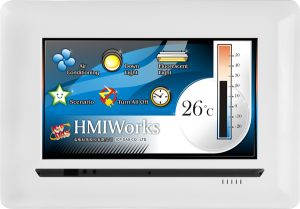
The TPD-703 is a 7-inch touchscreen HMI designed for building automation and industrial control applications.
Key Features
By connecting directly to networked controllers, the TPD-703 gives technicians instant access to:
This allows operators to monitor and adjust equipment on-site without carrying a laptop or returning to a control room.
Common BMS Applications
HVAC Control
Monitor and manage:
Automated control helps maintain comfort while reducing energy consumption.
Energy Management
Track and optimize:
This data helps facilities identify inefficiencies, lower operating costs, and support sustainability goals.
Lighting Control
A BMS can:
Alarm & Maintenance Management
Monitor equipment health and receive alerts for:
Early detection helps reduce downtime and avoid costly repairs.
Indoor Air Quality Monitoring
Track critical environmental conditions, including:
This helps maintain healthier, more comfortable indoor environments.
Security Integration
Many facilities integrate:
Combining security and facility data provides a more complete view of building operations.
Critical Facility Management
Hospitals, data centers, manufacturing plants, and other mission-critical facilities use BMS platforms to monitor:
Continuous monitoring helps maximize uptime and operational reliability.
Water & Utility Monitoring
A BMS can also oversee:
This helps facility teams track consumption, detect leaks, and improve system performance.
Final Thoughts
A Building Management System is much more than a monitoring screen. It’s the central hub that connects building equipment, controllers, and operators into one intelligent platform.
When paired with a local touchscreen interface like the TPD-703, facility teams gain both system-wide visibility and convenient on-site control, enabling faster decisions, improved efficiency, and more reliable building performance.
Contact ICP DAS USA today to discuss your project requirements, request pricing, or schedule a product consultation.


