
Zhangbei Wind, Solar & Energy Storage Demonstration Project (China)
Introduction
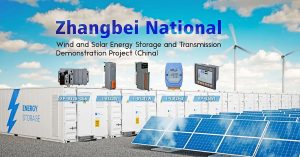
The Zhangbei National Wind and Solar Energy Storage and Transmission Demonstration Project in Hebei Province, China, is one of the world’s largest battery energy storage facilities and a pioneering example of integrated renewable energy infrastructure. The project combines wind power, solar power, energy storage, and smart transmission technologies into a single, comprehensive energy system.
To address the intermittent nature of renewable energy generation, excess electricity produced during periods of high wind or solar output, or during off-peak demand hours, is stored for later use. The stored energy can then be released back to the grid during periods of high demand or reduced renewable generation, helping improve grid stability and energy reliability.
Challenges
Harsh Environmental Conditions
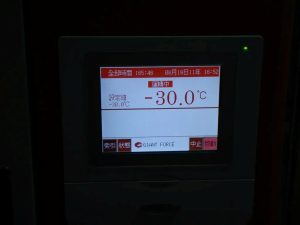
The project operates in a region where average temperatures remain below 0°C for much of the year. As a result, the battery management system (BMS) must maintain reliable performance in extreme environments, including temperatures ranging from -30°C to 85°C and deployments at elevations exceeding 4,000 meters.
Complex Communication Requirements
The customer-developed Battery Management Unit (BMU) monitors critical battery data, including:
The BMUs collect and manage data from multiple battery packs, enabling battery cabinet management, supporting energy storage and power dispatch operations, and providing real-time status information to a remote monitoring center.
ICP DAS USA Solution for the Zhangbei Project
ICP DAS USA delivered a scalable and reliable battery management architecture tailored to the project’s demanding requirements.
Each battery cabinet management platform supports up to 12 Battery Information Concentrators, while each concentrator can connect to up to 18 BMUs. This flexible architecture enables centralized monitoring, efficient data collection, and reliable communication across the entire energy storage system, ensuring stable operation of the wind, solar, and energy storage infrastructure.
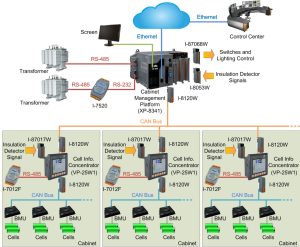
The Battery Management Unit (BMU) collects key battery data, including charge level, temperature, State of Charge (SOC), State of Health (SOH), charging current, and voltage. This information is transmitted to the battery information concentrators via the CAN Bus network.
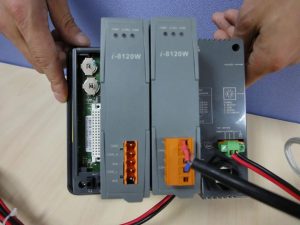
After gathering data from connected battery packs, the battery information concentrators periodically send the information to the XP-8341 Battery Cabinet Management Platform. Each concentrator uses two I-8120W modules to expand CAN Bus communications. One module communicates with the BMUs, while the other connects to the management platform. This design provides CAN Bus isolation, separates data traffic, and helps reduce network load.
In addition to collecting BMU data, the battery information concentrators continuously monitor current and voltage signals from insulation detectors using I-7012F and I-87017W modules. The data is regularly reported to the battery cabinet management platform to ensure safe operation. Because battery cabinet voltages can reach up to 700 VDC during charging, continuous insulation monitoring is essential for preventing equipment damage and safety hazards.
The XP-8341 Battery Cabinet Management Platform manages battery cabinet status, communicates with external systems through RS-232 and RS-485 interfaces, monitors insulation alarms, and controls battery relays. To enhance system safety, an I-87068W module is used for relay control. Equipped with an onboard MCU and watchdog timer, the module automatically switches outputs to a predefined safe state if communication with the management platform is interrupted, helping prevent unsafe operating conditions.
The platform also includes Ethernet connectivity, allowing battery cabinet data from across the energy storage facility to be transmitted to a remote monitoring center for centralized supervision and control.
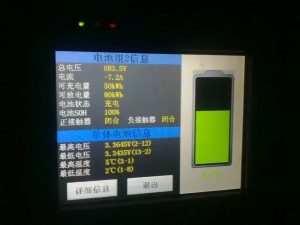
For local maintenance and diagnostics, battery cabinet information is available on both the management platform display and the touchscreen installed on each battery information concentrator. Operators can easily view detailed battery data and system status, simplifying routine maintenance and troubleshooting.

Benefits of the ICP DAS USA Solution
The implementation of the ICP DAS USA battery management solution provided several key advantages:
Conclusion
Since becoming operational in December 2011, the Zhangbei Wind, Solar & Energy Storage Demonstration Project has delivered safe, stable, and reliable renewable energy generation. The project has demonstrated the effectiveness of integrating wind power, solar power, energy storage, and smart grid technologies to improve energy reliability and support sustainable development.
ICP DAS USA contributed to the project’s success with a robust battery management solution designed for demanding environmental conditions and mission-critical applications. Backed by extensive engineering expertise and a commitment to reliability, ICP DAS USA provides innovative solutions that help customers build safe, efficient, and dependable energy management systems.


