
Smart Energy Management Solutions for Panel Display Manufacturing
Introduction
A leading panel display manufacturer produces TFT-LCDs, LCDs, and touch panels in cleanroom environments equipped with HEPA inverters. To ensure reliable inverter operation and improve energy efficiency, the company needed a way to monitor inverter current in real time. ICP DAS’s energy management solution enables continuous remote monitoring, helping the manufacturer optimize energy usage, detect potential issues early, and support preventive maintenance.
Easy Energy Data Collection with Smart Power Meters
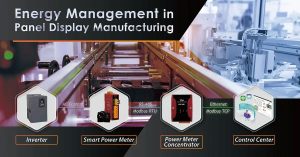
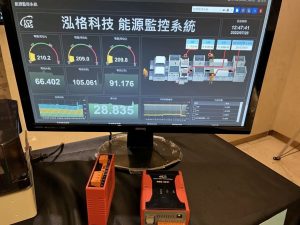
The manufacturer uses the PM-3114-100 Single-Phase Power Meter to collect AC current data from HEPA inverters. Data is transmitted to the PMC-5231 Power Meter Concentrator over an RS-485 network using Modbus RTU, then sent via Ethernet using Modbus TCP to the central control system. This allows energy consumption data from across the production line to be collected, monitored, and analyzed in real time, providing greater visibility into equipment performance and energy usage.
Smart Power Monitoring and Energy Management
The PM-3000 Series Smart Power Meters provide high-accuracy power measurements (better than ±0.5%) for both low-voltage and medium/high-voltage applications. They deliver reliable energy consumption data and real-time equipment monitoring, helping facilities improve operational efficiency and identify potential issues before they cause downtime.
The PM-3114-100 Single-Phase Power Meter supports current measurements from 0.05 A to 60 A and AC voltages from 10 to 300 V, making it suitable for a wide range of global applications. Built-in relay outputs can trigger sirens, warning lights, or other alarms when abnormal conditions are detected. Support for Modbus RTU also simplifies integration with existing control systems.
Centralized Data Collection and Control
The PMC-5231 IIoT Power Meter Concentrator combines power data collection, storage, logging, visualization, energy management, edge computing, and remote notifications in a single device. It can connect up to 24 Modbus power meters and 8 Modbus I/O modules through RS-485 or Ethernet, allowing users to monitor and record power usage across multiple devices from one platform.
Power data can be shared with SCADA systems, IoTstar software, or other energy management platforms for centralized monitoring and analysis. A built-in web server allows users to view real-time power information, configure settings, and create monitoring dashboards directly through a web browser without programming.
Intelligent Alerts and Preventive Maintenance
The PMC-5231 includes built-in edge computing with IF-THEN-ELSE logic, enabling automated actions based on power conditions. When abnormal inverter current is detected, the system can immediately send alerts via email or LINE, helping maintenance teams respond quickly and reduce the risk of unexpected equipment failures.
Key Benefits
Supporting Sustainability and Carbon Reduction Goals
As organizations work toward carbon reduction and sustainability targets, accurate energy monitoring has become more important than ever. ICP DAS energy management solutions help businesses track energy consumption across critical equipment, including chillers, HVAC systems, lighting, manufacturing machinery, and EV charging stations. This data provides the visibility needed to reduce energy waste, improve efficiency, and support carbon management initiatives.
IoTstar Cloud-Based Energy Management
When combined with the PMC-5231, IoTstar IIoT Cloud Management Software automatically collects, stores, and analyzes power consumption data. Built-in data recovery features help ensure complete and accurate records, even during communication interruptions.
IoTstar enables remote monitoring and control of connected devices while providing customizable dashboards that display key energy metrics in real time. Users can easily share dashboards, generate reports, analyze historical trends, and export data to PDF or Excel, making energy performance tracking and reporting simple and efficient.
Conclusion
As ESG and sustainability initiatives become increasingly important, companies are looking beyond financial performance to better understand and reduce their environmental impact. Organizations that embrace sustainable business practices can strengthen stakeholder confidence, improve operational efficiency, and reduce long-term risk.
With ICP DAS’s energy management solution, the manufacturer gains real-time visibility into HEPA inverter performance, enabling maintenance teams to monitor AC current levels continuously. This helps reduce energy consumption and carbon emissions while supporting preventive maintenance strategies that minimize unplanned downtime, equipment damage, and costly repairs.
The solution’s flexible architecture and broad communication protocol support make it easy to integrate with existing monitoring and management platforms. By combining real-time energy data, intelligent alerts, and centralized monitoring, ICP DAS provides a practical and scalable foundation for achieving energy efficiency and advancing ESG goals.


